
A Complete Recovery Curriculum. Ready to Implement.
The Be Alright Recovery Program™ is a fully developed, trauma-informed curriculum designed for organizations ready to deliver meaningful, evidence-based recovery support — without spending hundreds of hours building it from scratch.
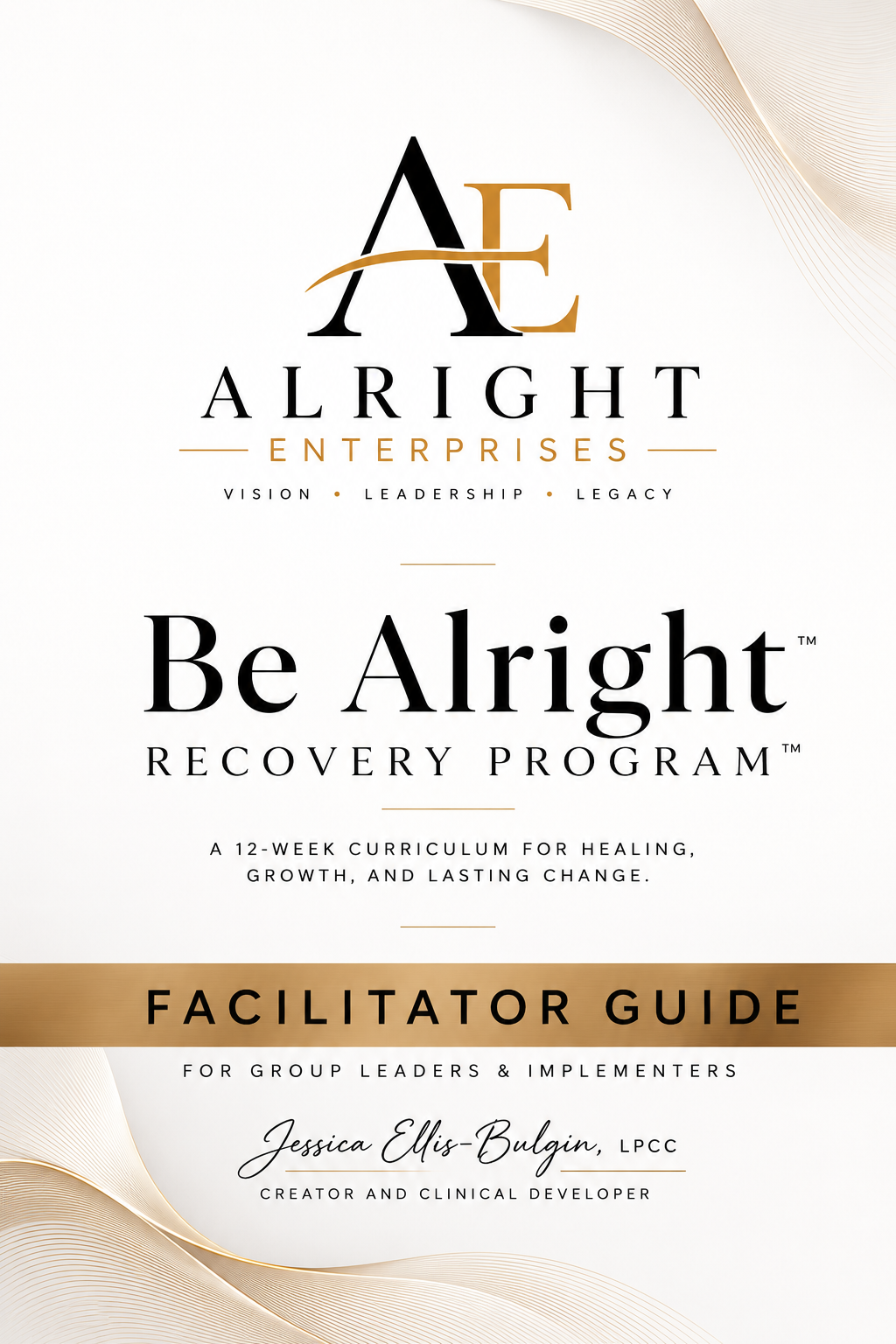
Program Overview
The Be Alright Recovery Program™ is a structured, 12-week group curriculum built for organizations that serve individuals navigating addiction, trauma, and behavioral health challenges. It was designed to bridge the gap between clinical rigor and compassionate, community-centered care.
The Problem It Solves
Many organizations want to offer quality recovery programming but lack the time, resources, or clinical expertise to develop a curriculum from the ground up. The Be Alright Recovery Program™ eliminates that barrier — providing a facilitator-ready, evidence-based solution that organizations can implement with confidence from day one.
Who It Was Designed For
This program was built for behavioral health organizations, faith-based communities, treatment centers (RTC, PHP, IOP, OP), nonprofits, churches, and community organizations seeking a turnkey, trauma-informed recovery curriculum that meets participants where they are.
The Approach
Why Organizations Choose This Program

Every lesson, guide, and resource is complete and ready to use. No curriculum development required — your team can focus entirely on serving participants.
Fully Developed & Facilitator-Ready

Grounded in CBT, DBT, and ACT frameworks, the curriculum integrates trauma-informed principles throughout — ensuring participants feel safe, seen, and supported at every stage of recovery.
Trauma-Informed & Evidence-Based

Designed to work across faith-based and secular settings alike. The program respects spiritual values while maintaining clinical integrity — making it a trusted fit for churches, ministries, and behavioral health organizations.
Faith-Compatible. Clinically Sound.
What's Included

Facilitator Guide
A comprehensive guide equipping facilitators with session-by-session instructions, discussion prompts, and facilitation tips.

Participant Workbook
Engaging, structured workbooks that guide participants through each lesson with reflection exercises, worksheets, and group activities.

Staff Implementation Guide
Everything your team needs to launch and sustain the program — from onboarding staff to managing group logistics and tracking outcomes.

60 Facilitator-Led Lessons
A full library of structured lessons spanning the complete 12-week curriculum — each designed for group delivery with clear objectives and outcomes.

Curriculum Snapshot
The Be Alright Recovery Program™ unfolds across four intentional phases — each building on the last to guide participants from crisis to sustainable wellness.
Phase 1: Building the Foundation
Participants establish safety, trust, and self-awareness. Core concepts of recovery, identity, and personal responsibility are introduced in a supportive group environment.
Phase 2: Healing & Emotional Wellness
Participants explore the emotional roots of addiction and trauma. Evidence-based tools from CBT and DBT help them develop healthier coping strategies and emotional regulation skills.
Phase 3: Relationships & Trauma Recovery
Phase 4: Sustainable Growth & Relapse Prevention
Participants explore the emotional roots of addiction and trauma. Evidence-based tools from CBT and DBT help them develop healthier coping strategies and emotional regulation skills.
Frequently Asked Questions
Who can facilitate the program?
1
The program is designed to be facilitated by trained staff, counselors, case managers, ministers, or peer support specialists. Facilitators do not need to be licensed clinicians, though clinical oversight is recommended in treatment settings.
Is this a faith-based program?
2
The curriculum is faith-compatible, not exclusively faith-based. It was designed to serve both faith-based and secular organizations. Spiritual content is present but not prescriptive, allowing organizations to adapt the tone to their community.
Can organizations customize the curriculum?
3
Yes. Organizations can adapt certain elements to align with their population, setting, and organizational culture. Customization options are discussed during the implementation process.
Is staff training available?
4
Yes. Alright Enterprises offers facilitator training and staff onboarding support to ensure your team is fully prepared to deliver the program with confidence and fidelity.
Why Alright Enterprises
Built on Practical Implementation
1
Alright Enterprises was founded on a simple conviction: quality recovery programming should be accessible to every organization willing to do the work. The Be Alright Recovery Program™ was not built in a boardroom — it was developed through direct experience with the populations it serves.
Evidence-Based. Trauma-Informed. Compassionate.
2
Every element of the curriculum reflects a commitment to evidence-based care, trauma-informed principles, and compassionate leadership. The program does not ask organizations to choose between clinical credibility and human connection — it delivers both.
A Partner in Your Mission
3
Alright Enterprises is more than a curriculum provider. The goal is to equip organizations with the tools, training, and support they need to create lasting change in their communities — and to do it with integrity at every step.
Program Outcomes
4
By the end of the program, participants can expect to have developed stronger emotional regulation skills, a clearer understanding of their trauma history and its impact, healthier relationship patterns, practical relapse prevention strategies, and a renewed sense of identity, purpose, and hope for sustainable recovery.